
I saw this topic spring up online recently, and it got me thinking: what makes a subplot bad? As a writer, it’s an important question—the fewer bad subplots, the more money we make. The more money we make, the faster we become eccentric weirdos hammering away on a typewriter in our custom-built, cliff-perched, storm-wracked Enya castles.
I mean, the more fulfilling art we can make or whatever.
So, how can we avoid the dreaded D-level B-plot?
Here are a few subplot issues I struggle with, both in what I’m reading/watching and what I’m writing:

The subplot feels too disconnected from the main story. This could be lack of crossover with characters, plot, or theme. It feels tacked on.
Sometimes a disparate subplot will eventually fold into the main plot with a nice “Eureka!” moment. This is the bread-and-butter of mystery novels, where the detective is struggling with two unrelated problems/cases and then, whoops, they’re the same case. But if the writer takes too long to connect them (plotwise or thematically), the eventual connection may feel like an asspull.
If you find yourself, as the writer, asking “what’s the point of this side story?”, some revision may be in order. Maybe the subplot just needs a little tweaking to tie into the action and themes of the main plot, don’t feel like you have to toss the whole thing.
The subplot stars characters that aren’t interesting/I don’t like. The likability conversation is a whole other bag of snakes. But if the subplot centers on characters the reader finds uncompelling, the subplot becomes a hurdle the reader has to repeatedly jump to get back to the characters they actually want to spend time with.
This kind of issue is practically the reason beta readers exist. Somebody, somewhere, at some point in the process needed to tell the writer “…I don’t really care about the protagonist’s boss, so can him slowly transforming into a Mediterranean house gecko happen off-page or something?”
The subplot is left unresolved, or resolves in an unsatisfying way. A lack of resolution can sour any plot or character arc, but subplots (by their very nature) are the most likely to be forgotten or underfed by the writer. When big cuts come in editing, subplots are the most likely to be left dangling, too.
One of the most obvious ones that comes to mind is from the movie STAR TREK: GENERATIONS. Which is a movie I like and have defended in the past. But my biggest complaint is that the movie burns a few yards of celluloid on Data—the unemotional android—finally getting an emotion chip, and then completely fails to close it out.
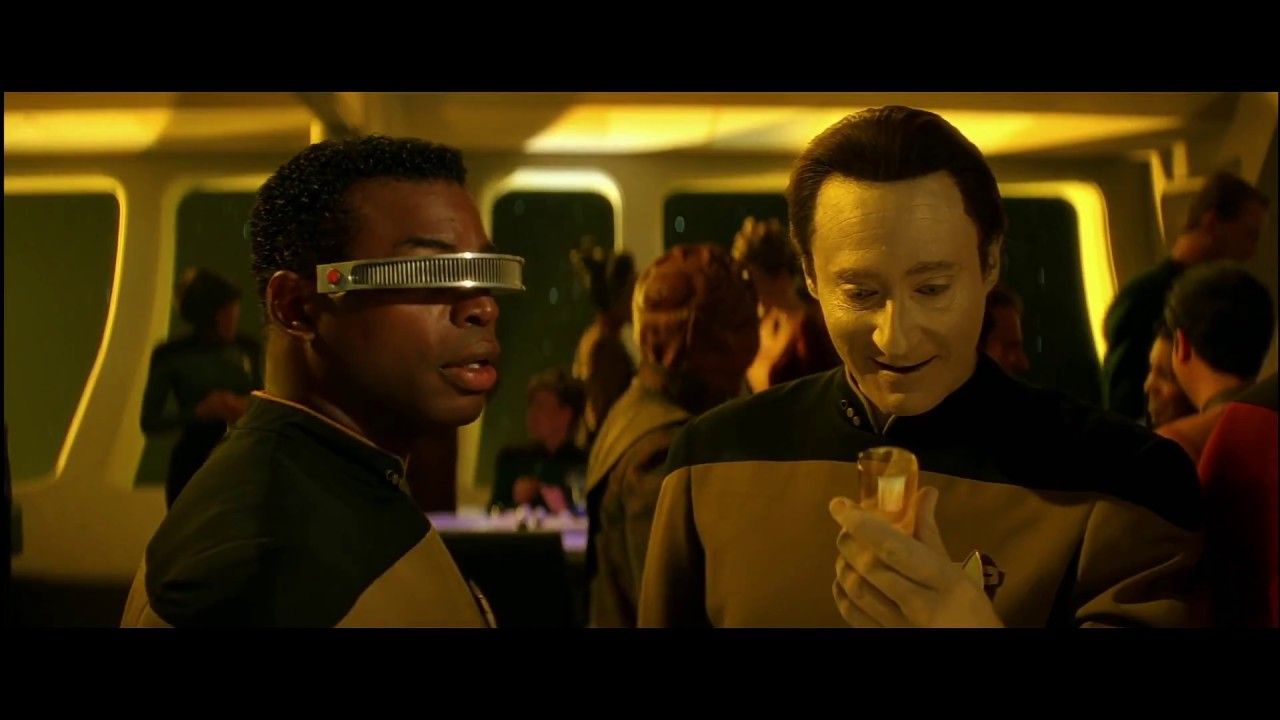
It starts like a normal subplot, and it’s going alright for awhile. We see Data struggle to connect with humor/his friends without a chip, he seeks it out despite the risks, it leads him into trouble where he feels like he betrayed his friends, and then…done. It’s a subplot without a climax, and, ultimately, a point. The movie is almost over, gotta wrap shit up. Show us he’s fine now and roll credits.
The subplot is taking up too much oxygen. This usually happens when a writer has gotten their main plot and their subplot mixed up, probably in early development of the story. They’re spending way too much time on what feels like a tangent to the reader.
This creates a dissonance, where the reader doesn’t even know what the story is anymore. “I thought this book was about robo-giraffes, why are we spending so much time on the little brother’s tractor business?”
It’s totally fine to have the character-focused plot front and center and the action/drama/world plot in the background, but that’s a choice you need to make early and stick to it.
A good subplot should mirror, comment on, advance, or argue with the main plot in some way. What are your favorite subplots? Or the ones that make your eye twitch and your hand transform into an iron fist for punching? Lemme know in the comments.
You can subscribe to read blogs as they arrive, or follow me on Threads for blog updates.


 B.C. Johnson